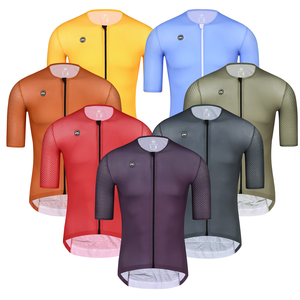
Cycling Uniform
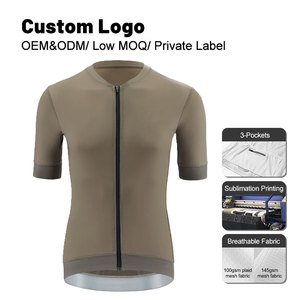
- Aerodynamic Micro-Mesh Polyamide
- Full-Sublimation Italian Inks

Manufactured under strict ISO-grade quality protocols in our dedicated Sialkot facility. Sourced, cut, printed, and hand-inspected for elite athletic organizations across Tokyo and international competitive circuits.
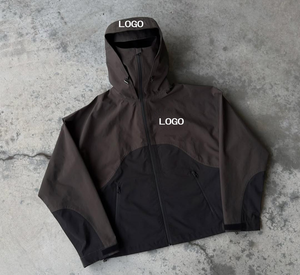
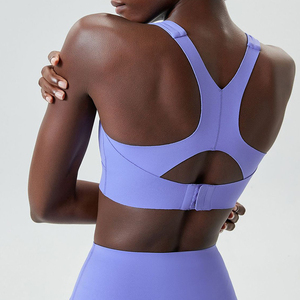
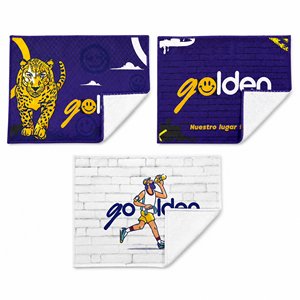
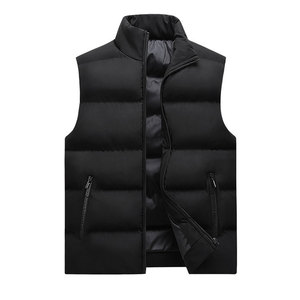
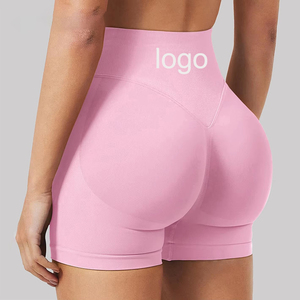
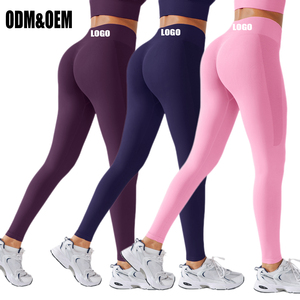
Tokyo's sports culture presents unique micro-environmental challenges: intense humidity during summer training cycles, stringent aesthetic and finish requirements, and multi-functional team utility spanning corporate ekiden relays, futsal arenas, and inter-collegiate leagues.
Training along the Arakawa River or competing in un-airconditioned school gymnasiums across Kanto demands hyper-wicking yarn structures. Our specialized warp-knit interlock fabrics disperse perspiration across maximum surface area, enabling flash-evaporation in 85%+ relative humidity without weight penalty or fabric cling.
Sublimation team jerseys destined for Tokyo corporate entities and varsity clubs demand absolute visual rigor. Standard transfer techniques frequently bleed complex Japanese kanji or micro-typography. We utilize ultra-dense disperse ink sets and calibrated flatbed heat presses yielding razor-sharp graphic boundaries and true JIS/Pantone color reproduction.
Standard European and North American sports block patterns consistently suffer from excessive sleeve drop and disproportionate torso widths for East Asian demographics. ALEZ Industry engineers bespoke Asian ergonomic grading profiles, ensuring natural thoracic alignment, proportional armscyes, and streamlined silhouettes.
From underground futsal complexes in Shibuya to varsity boat races on the Sumida River, here is how our custom sublimated jerseys integrate into Tokyo's multifaceted team landscape.
Engineered for high-intensity friction on artificial turf across Shibuya, Shinjuku, and Toyosu rooftop pitches. Abrasion-resistant sublimated side panels prevent pilling against artificial turf granules.
Ultralight 110-130 GSM aerated mesh singlets and short-sleeve tops designed specifically for corporate marathon and relay teams circling the Imperial Palace track.
Durable matchday kits tailored for rigorous university sporting syndicates across the Kanto area, balancing durability through intensive daily laundering with budget accessibility.
High-contrast, saturated dye-sublimation esports jerseys with anti-static threads, ergonomic posture cutouts, and reinforced collars suited for studio lighting in Akihabara events.
A data-backed engineering breakdown highlighting why Tokyo teams are systematically phasing out screen-printed rubber pastes and heavy tackle twill in favor of deep molecular infusion sublimation.
| Evaluation Parameter | Direct Molecular Sublimation (ALEZ) | Legacy Plastisol Screen Printing | Traditional Vinyl Cut & Heat Press |
|---|---|---|---|
| Fabric Breathability | 100% Unaltered Porosity (Ink binds to polymers) | Occluded pore structure; creates rigid "sweat zones" | Solid film barrier; completely blocks airflow |
| Hand Feel & Tactility | Zero-Hand Feel (Indistinguishable from bare fiber) | Noticeable raised rubberized profile | Thick, synthetic plastic laminate patch |
| Delamination / Cracking | Zero Degradation (Molecules fuse permanently) | Cracks and fragments after 25-40 wash cycles | Peels and lifts at high contact margins |
| Design Complexity / Numbers | Unlimited Colors, Names & Numbers without surcharge | Per-color screen setup costs increase exponentially | Weeding intricate details requires manual labor surcharges |
| Weight Addition per Jersey | 0.0 grams added dry or wet | +25g to 45g of cured ink paste | +30g to 60g of poly-vinyl substrate |
As Tokyo athletic organizations adapt to corporate governance changes, carbon accounting metrics, and flexible roster formats, three distinct procurement shifts have surfaced.
Tokyo athletic leagues and ESG-conscious Japanese corporations are pivoting toward post-consumer recycled poly (rPET) yarns. ALEZ Industry provides GRS-compliant recycled polyester that maintains identical tensile resilience, color uptake, and moisture absorption characteristics to virgin polyester.
Traditional domestic trading companies (Shosha) historically forced clubs to buy 100+ units minimum, leaving teams holding dead stock when player rosters changed mid-season. With our factory-direct 20-piece baseline and swift digital replenishment patterns, Tokyo clubs maintain zero excess inventory.
Procurement managers in Tokyo are increasingly disintermediating traditional wholesale brokers. By dealing directly with manufacturing centers in Sialkot, teams recover 30-45% of their apparel budgets while gaining unfiltered engineering control over fabric hand, stitching tolerances, and sample iterations.
Clear, direct technical answers addressing the operational queries commonly posed by athletic directors, apparel startup founders, and purchasing committees across Japan.
Shipments bound for Tokyo are dispatched via express air freight (DHL, FedEx, or specialized air cargo) directly clearing through Tokyo Haneda (HND) or Narita (NRT) airports. All parcels arrive accompanied by clear commercial invoices, HS Code classification (under Chapter 61 for knitted/crocheted sportswear), and accurate country-of-origin documentation. Custom duties and Japan’s consumption tax (10%) are handled cleanly via the carrier’s electronic advance declaration system.
Our baseline factory production MOQ is strictly 20 pieces per design. This enables Tokyo brands, academic clubs, and corporate leagues to test new visual identities or produce limited runs for specialized tournaments without incurring dead capital. Within the 20-piece allocation, multiple sizing variants (S, M, L, XL, etc.) can be combined seamlessly without penalty.
Yes. We have established Japanese Industrial Standard (JIS L 4005) sizing templates for adult men, women, and junior athletics. If your team or private label provides custom grading sheets or a physical benchmark garment, our pattern cutters digitize and execute those measurements with strict ±1 cm dimensional tolerances.
Before launching volume cutting, we produce an exact physical sample featuring your fully sublimated graphics, neck labels, silicone grippers, and selected fabric weight. This piece is dispatched to Tokyo via DHL Express for your hands-on tactile evaluation. Bulk assembly commences solely after written sample confirmation.
Yes. Our corporate organizational structure includes dedicated executive representation (Sheikh Nisar, Company Representative in Japan) ensuring fast communication across Japan Standard Time. Technical inquiries, sample approvals, and freight updates are synchronized directly to your business hours.
Bulk production for orders under 1,000 units requires 7 to 10 working days following sample sign-off. Express air courier transit from Pakistan to Tokyo requires 3 to 4 business days. In total, custom batches can be designed, cut, sewn, and delivered to your Tokyo address within roughly 14 to 18 business days.
Headquartered in Sialkot, Pakistan—the undisputed global hub for precision sports equipment and technical athletic wear—ALEZ Industry integrates end-to-end manufacturing with global customer accountability.
No intermediaries, no regional commission agents, and no drop-shipping broker layers. You communicate directly with the operational management team that cuts, transfers, and stitches your garments. This guarantees transparent unit economics and immediate answers.
Each individual jersey undergoes meticulous visual and dimensional inspection: seam tensile integrity, neck collar flatlock uniformity, barcode tags, and Pantone dispersion accuracy. Finished garments are steam-finished and individually sealed before bulk shipment.
Led by CEO Muhammad Pervaiz in Sialkot alongside regional directors in the United States and Japan, we bridge the gap between heavy industrial capacity and refined local market communication.