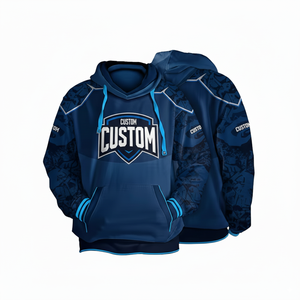

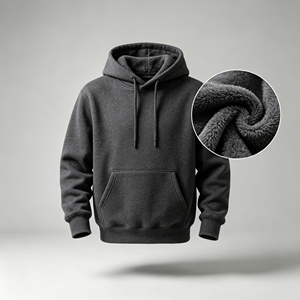
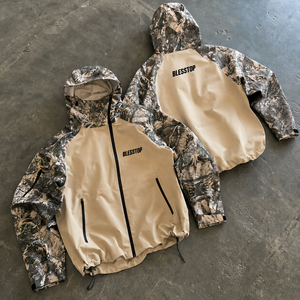
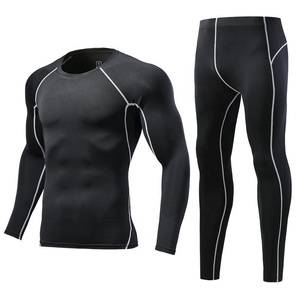
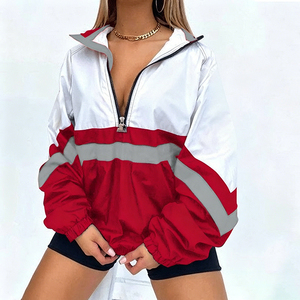
Browse through our verified production capabilities spanning waterproof packables, technical windbreakers, moisture-wicking compression layers, and specialized fleece outerwear ready for private-label deployment.
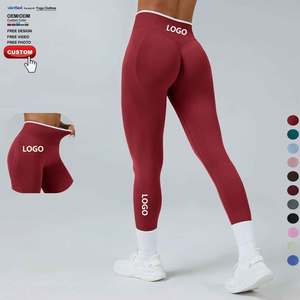
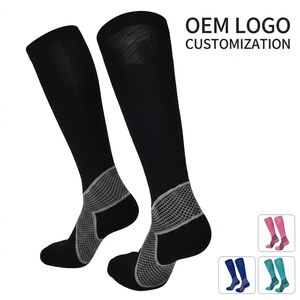
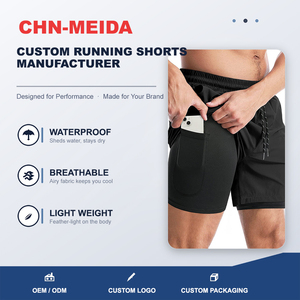
In modern performance apparel, the term "packable rain jacket" covers a vast continuum ranging from disposable promotional capes to ultralight, alpine-grade 3-layer laminates weighing under 120 grams. For international brand buyers, supply chain managers, and outdoor apparel labels, navigating Chinese manufacturing ecosystems requires an uncompromising command of membrane chemistry, lamination physics, hydrostatic head metrics, and seam-integrity thresholds.
For ultra-compressible packable silhouettes, 2.5-Layer textiles reign supreme. Comprising a featherweight face fabric (typically 10D to 20D micro-ripstop nylon 6,6), a microporous PU or monolithic membrane, and a raised "half-layer" carbon or ceramic dry-touch print, 2.5L structures eliminate heavy knit tricot backings. This slashes pack volume down to the size of an apple while sustaining hydrostatic ratings up to 15,000 mm H₂O.
True functional outerwear balances water column resistance (ISO 811) against dynamic vapor transmission (JIS L 1099 B1 / ASTM E96). Top-tier Chinese export mills synthesize hydrophylic polyether-ester and expanded polytetrafluoroethylene (ePTFE) films delivering 20,000mm waterproofing alongside 25,000 g/m²/24h MVTR, preventing the internal condensation build-up known as the "clammy sauna effect".
Every puncture made by an industrial needle is an entry channel for precipitation. Advanced outdoor exporters deploy hot-air seam sealing tape ranging between 8mm and 13mm in width—substantially narrower than conventional 20mm apparel tape. By combining narrow polyurethane elastic tapes with digital hot-wedge applicators, seam stiffness is eliminated while passing rigorous 3-bar centrifuge pressure audits.
| Fabric Class | Composition & Denier | Membrane Type | Hydrostatic Rating (ISO 811) | MVTR (Inverted Cup) | Target Garment Weight |
|---|---|---|---|---|---|
| Ultralight Trail Run Shell | 10D / 15D Recycled Nylon 6.6 Ripstop | Hydrophilic Polyurethane (PU) 2.5L | 10,000 mm – 15,000 mm | 20,000 g/m²/24h | 110g – 145g |
| All-Weather Commuter Packable | 30D Recycled Polyester Taslan Dobby | Microporous TPU Laminate 2.5L | 8,000 mm – 10,000 mm | 8,000 – 12,000 g/m²/24h | 180g – 240g |
| Alpine Emergency Shell | 20D High-Tenacity Cordura® Nylon Ripstop | Microporous ePTFE / PU Hybrid 3L | 20,000 mm – 28,000 mm | 25,000 – 30,000 g/m²/24h | 190g – 260g |
| Urban Lifestyle Wind/Rain Shell | 50D Peached Polyester Mechanical Stretch | Clear Breathable PU Coating | 5,000 mm – 8,000 mm | 5,000 g/m²/24h | 280g – 350g |
Sourcing strategies in technical apparel are undergoing structural upheavals driven by chemical regulatory shifts, environmental legislation, and micro-engineering breakthroughs. Forward-thinking procurement teams must evaluate suppliers against the following four overarching industry developments.
With stringent EU REACH mandates, California AB 1817, and global retailer bans on fluorinated compounds (per- and polyfluoroalkyl substances), China's premier wet-processing mills have aggressively phased out C8 and C6 chemistries. The prevailing benchmark is bio-based or silicone-derived C0 Durable Water Repellents. Sourcing managers must verify that OEM partners conduct dynamic spray-rating audits (AATCC 22) confirming water repellency scores of at least 80 points after 20 commercial laundering cycles.
Traditional composite jackets blending nylon faces, polyurethane membranes, polyester sewing threads, and zinc-alloy zippers create recycling impossibilities. The vanguard of China's export manufacturing is pioneering Mono-Material Polyester (PET) and Polyamide (PA) architectures. Face fabric, membrane layer, taped seam adhesives, and injected zipper chains are synthesized from matching molecular polymers, ensuring garments can enter closed-loop chemical recycling streams post-consumer.
Modern packable garments must collapse seamlessly into integrated storage capsules—either through reversible chest stowage pockets equipped with double-pull reversible YKK zippers or collar-integrated pack compartments. Innovative factories utilize laser-perforated air-bleed channels along pocket bags to exhaust entrapped air instantaneously during compression, reducing packed bundle volume by up to 35% without damaging internal membranes.
International buyers face strict requirements concerning carbon disclosures and chain of custody tracking under the EU Corporate Sustainability Due Diligence Directive. Leading Chinese exporters have integrated GRS (Global Recycled Standard), OEKO-TEX Standard 100, and bluesign® certification matrices into their ERP workflows, providing lot-by-lot yarn verification, wastewater treatment documentation, and energy expenditure metrics directly on export manifests.
Combining impermeable stormproofing with aerobic comfort requires targeted airflow. Ultrasonic cutting and computerized laser micro-perforations beneath axillary and dorsal storm flaps allow active heat exhaust while preserving absolute downpour integrity.
Bypassing intermediaries, import brokers, and trading layers unlocks tangible manufacturing efficiencies, complete quality control transparency, and direct engineering collaboration from initial tech-pack ideation down to customs container loading.
Our factory floors incorporate state-of-the-art Gerber and Lectra automated CAD nesting systems. Whether you supply detailed Gerber vector tech-packs, Adobe Illustrator 3D schematics, or physical benchmark reference garments, our sample patternmakers execute first-iteration counter-samples in 5 to 7 working days. Our rapid digital 3D grading accommodates standard US, European, and Asian size blocks with millimeter precision.
Quality control is not an afterthought handled at packaging; it is an intrinsic element embedded within every production step. Raw fabric rolls undergo hydrostatic column checks, Martindale abrasion audits, and colorfastness tests prior to cutting. Assembled shells pass through rain-tower simulation chambers (EN 343 standard) and seam tensile pull tests before polybagging and carton packing.
Addressing essential technical, contractual, regulatory, and logistics queries encountered by overseas buyers when establishing manufacturing pipelines.
While industry commodity runs require 1,000–3,000 units per colorway due to fabric dye-lot minimums, flexible OEM exporters structure specialized programs. With ready-stock technical greige rolls in verified black, navy, and graphite, custom trial production can launch from as low as 50–200 units per style, enabling emerging brands to validate retail demand before scaling to 5,000-unit production runs.
Tape delamination occurs when hot-air temperature, applicator pressure, and dwell time fail to match the specific chemical adhesive of the PU tape. Our production uses calibrated hot-wedge machines with microprocessor-controlled thermal sensors (operating between 180°C and 220°C depending on membrane melting points). Every lot is tested through 5 consecutive 40°C home wash cycles to ensure zero adhesive peel-back.
Yes. We exclusively procure and apply certified C0 non-fluorinated water-repellent emulsions from international chemical manufacturers (such as Huntsman, Archroma, or Rudolf). Every export shipment includes third-party testing documentation (SGS or Intertek) verifying Total Fluorine content below 50 ppm, ensuring uninterrupted customs clearance and retail compliance.
Prototyping and size grading typically require 7 to 10 business days. Following physical pre-production (PP) sample sign-off and lab-dip color confirmation, bulk production of 1,000 to 5,000 pieces takes approximately 30 to 45 working days, accounting for weaving, lamination, laser cutting, seam sealing, testing, and multi-tier QC auditing.
Direct TPU coatings are applied as a liquid polymer directly onto the inner surface of the textile. While economical, coatings are heavier, stiffer, and prone to micro-cracking over time. Laminated membranes (PU, TPU, or ePTFE) are pre-formed microporous films heat-bonded to the shell fabric under controlled tension, delivering vastly superior tear strength, flex durability, and higher breathability coefficients.
Complete custom branding is supported. This includes customized silicone zipper pullers, waterproof inverted zipper prints, laser-cut bonded pocket trims, custom woven neck and care labels, FSC-certified hangtags, and custom-branded recyclable polybags with barcode SKU labeling tailored to your 3PL warehouse intake requirements.
Standard export orders operate on FOB (Shenzhen, Ningbo, or Shanghai) or CIF terms depending on whether you utilize your own freight forwarding partners. Air-express courier (DHL/FedEx) options are available for sample prototypes and urgent capsule runs. Commercial payments typically proceed under 30% T/T deposit with 70% payable against Bill of Lading (B/L) copy or verified Irrevocable L/C at sight for institutional purchase orders.
We welcome third-party audit agencies including Bureau Veritas, SGS, and QIMA for Sedex, BSCI, or ISO 9001 compliance inspections. During active production runs, our bilingual account management team provides weekly digital production tracking dashboards alongside high-resolution video and photo documentation of cutting, stitching, taping, and packaging milestones.
Direct manufacturing access, certified C0 PFAS-free engineering, transparent factory pricing, and end-to-end tech-pack execution. Speak directly with our production engineering division to receive an itemized quotation and fabric swatch kit within 24 hours.
Send an Inquiry