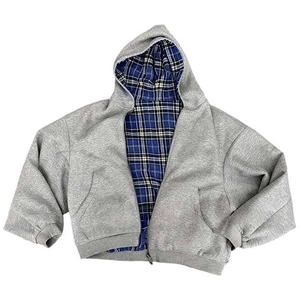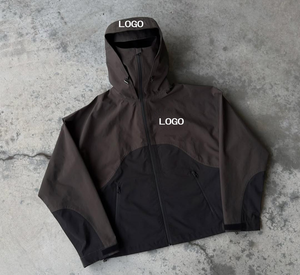
Wholesale High-quality Winter Sports Varsity Hooded Men's Outdoor Windbreaker
- Material: Hydrophobic Ripstop Nylon
- Wicking Metric: DWR + Micro-Venting Matrix
- Customization: Silicone Badges, Thermal Seams
Engineered for endurance sports, training clubs, tactical operations, and private label fitness brands. Each technical garment incorporates hydrophobic filament yarns, high-gauge interlock circular knitting, and multi-directional stretch elasticity.
A standard cotton t-shirt absorbs up to 7% of its dry weight in moisture while holding liquid within cellular fibers, causing thermal chilling, chafing, and microbial degradation. True quick dry apparel engineered in modern Chinese facilities replaces circular fiber profiles with grooved, cross-sectional synthetic polymers that exploit physical capillary pressure.
Rather than traditional round cross-sections, our extruders produce cross-shaped (+) or cloverleaf fibers. These create micro-grooves along each filament. The Laplace pressure differential forces perspiration along the channels from skin surface to the outer garment boundary in under 0.8 seconds.
Low-tier suppliers rely on chemical surfactant washes that degrade after 10–15 home laundry cycles. Our factory builds mechanical wicking directly into polymer matrices—delivering lifelong performance that maintains AATCC 79 droplet wicking < 1 second after 50 commercial washes.
Our double-knit circular machinery combines hydrophobic polypropylene or modified polyester on the inner skin layer with hydrophilic microfiber nylon on the outer face. Sweat cannot linger against the body; it is magnetically pulled to the outer face where air circulation accelerates evaporation.
| Fabric Composition & Yarn Spec | GSM Range | Liquid Moisture Management (AATCC 195) | Drying Time (JIS L 1096 Sec. 8.25) | Tensile & Burst Strength (ASTM D3786) | Ideal Athletic Application |
|---|---|---|---|---|---|
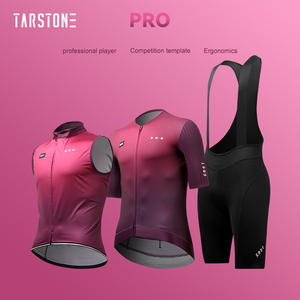
| 100% Micro-Interlock Coolmax Polyester | 120 - 145 GSM | OMMC Grade 4.8 (Very High Wicking) | 18 - 22 minutes | > 290 kPa | Marathon Running, Pro Cycling, Elite Soccer |
| 88% Nylon 6.6 + 12% Spandex 4-Way Pique | 160 - 190 GSM | OMMC Grade 4.5 (High Capillary Flow) | 24 - 28 minutes | > 380 kPa | Gym Training, Rugby Practice, Tactical Tops |
| Recycled Poly (rPET) / Bamboo Charcoal Hybrid | 140 - 165 GSM | OMMC Grade 4.6 (Inherent Antimicrobial) | 20 - 25 minutes | > 310 kPa | Eco-Athleisure, Outdoor Hiking, Golf Polos |
| High-Gauge Seamless Santoni Tubular Knit | 200 - 260 GSM | OMMC Grade 4.4 (Zoned Evaporation) | 28 - 34 minutes | > 420 kPa | Compression Baselayers, Yoga, Crossfit |
Apparel buyers, brand directors, and supply chain executives face rapid shifts in global compliance, sustainability mandates, and technical consumer expectations. Navigating Chinese textile procurement requires forward planning across four core structural shifts.
Buyers are phasing out virgin polyester. Global Recycled Standard (GRS 4.0) certification is now required by North American and European customs. Modern Chinese manufacturing integrates certified ocean-bound and post-consumer bottle flakes (rPET) without compromising capillary tensile strength or fiber purity.
Stringent EPA and EU REACH restrictions on Per- and Polyfluoroalkyl Substances (PFAS) demand bio-based durable water repellency (DWR) and fluorine-free finishes. Sourcing managers must demand verified test sheets demonstrating zero fluorinated organics on weather-resistant quick-dry outerwear.
The era of mandatory 3,000-piece initial order commitments is gone. Agile athletic brands demand a 20 to 50-piece minimum test run to validate consumer response on TikTok Shop and Amazon before scaling to 10,000 units. China's top factories utilize digital pattern cutting to accommodate rapid iteration without retooling friction.
Impending EU legislation requires transparent traceability from raw polymer pellet to weaving mill, dye vat, sewing line, and ocean freight logistics. Forward-thinking manufacturers embed QR-verifiable blockchain records into wash care tags detailing complete carbon and water footprints per garment unit.
How automation, microscopic polymer modification, and advanced garment construction are revolutionizing athletic apparel engineering.
Traditional sewing needles punch tiny holes through high-density synthetic fabric, creating friction points that cause skin irritation during ultra-marathons. Our ultrasonic bonding lines fuse panels using high-frequency acoustic vibrations and thermoplastic tape—achieving flat, 100% chafe-free seams with zero added stitch bulk.
Bacterial colonies metabolize sweat proteins in synthetic sportswear, causing permanent odor entrapment. We introduce inorganic silver nanoparticles (Ag+) directly into masterbatch melt-spinning. This halts 99.9% of microbial proliferation (AATCC 100 verified) without washing out into greywater systems.
Traditional ink printing blocks fabric breathing pores, choking air permeability. Our computerized digital dye sublimation vaporizes water-insoluble disperse dyes under 210°C thermal pressure, bonding pigments straight into polyester molecular chains. Pores stay wide open; colors never crack, peel, or fade.
Backed by deep industrial roots in high-performance apparel hubs, we combine vertical fabric knitting, computerized sublimation lines, and responsive North American and Japanese account management.
You negotiate directly with the factory floor that cuts, prints, knits, and stitches your shirts. No trading intermediaries or export broker fees. Our facility features in-house pattern making, a digital sampling lab, circular knitting rooms, and certified needle-check finishing lines. Our clients experience clear transparent cost structures, rapid engineering feedback, and strict IP protection for proprietary tech packs.
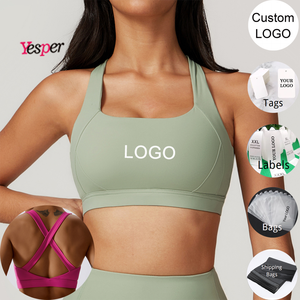
Launch customized styles without capital gridlock. Test sizing, consumer fit, and color variations starting at just 20 units per design with full private label trims.
Orders under 1,000 units are fully cut, sewn, inspected, and packed within 7–10 business days following pre-production sample approval. Rush priority slots available.
Every quick-dry t-shirt, jersey, and windbreaker is measured against approved tech-pack spec sheets. Tensile, seam stretch, and barcode scannability tests are documented before sealing.
With regional representatives serving North America, Europe, and the Asia-Pacific (including Japan), you receive rapid technical communication in your time zone without communication delays.
Essential technical, financial, and logistical insights for professional activewear procurement directors.
We employ three standardized testing protocols in our testing lab: AATCC 79 (Absorbency of Textiles) to calculate drop absorption time (< 1.5 seconds), AATCC 195 (Liquid Moisture Management) to evaluate Overall Moisture Management Capability (OMMC > 0.4), and ISO 17617 drying rate analysis. Buyers receive physical lab data sheets alongside their initial pre-production sample.
For high-aerobic endurance sports (marathon running, pro cycling), we recommend ultra-lightweights between 120 and 140 GSM with micro-mesh openings to maximize airflow. For gym training, tennis, and corporate activewear, 150 to 175 GSM interlock knit provides superior durability and zero opacity show-through. Tactical shirts require 180 to 220 GSM nylon-spandex ripstop or pique weaves for puncture resistance.
Yes. Our low minimum order quantity of 20 pieces per design allows flexible size distribution (e.g., S, M, L, XL, 2XL). Sublimation-printed garments can also accommodate individual player names and roster numbers at low incremental setup cost.
For 100% polyester or high-poly blends, digital dye sublimation is the gold standard because it infuses gaseous dyes directly into the synthetic matrix without coating pore structures. For nylon or rich cotton blends, we utilize water-based discharge screen printing or ultra-thin laser-perforated DTF (direct-to-film) transfers that flex without restricting sweat evaporation.
Our standard commercial term is a 70% advance payment to reserve production lines and purchase raw materials, with the remaining 30% balance plus freight settled upon final QA sign-off prior to dispatch. We accept secure Bank Wire (T/T), PayPal, Payoneer, Wise, and Western Union.
Quick dry synthetic t-shirts and jerseys fall under HS Code 6109.90 (T-shirts, singlets and other vests, of other textile materials - man-made fibers). For high-performance athletic jackets or windbreakers, HS Code 6201.40 or 6202.40 is typically utilized. We supply full documentation to streamline your import clearance through US CBP, European Customs, or Australian Border Force.
Connect directly with our senior activewear production engineers. Send your design brief, tech pack, or reference images to receive an itemized factory quotation, fabric swatches, and sampling timeline within 24 hours.