Why Choose Custom Athletic Tracksuits for Teams?
Team apparel has become more than a matching layer for travel days. It can shape first impressions, reinforce belonging, and support practical performance needs. The Sports & Fitness Industry Association’s 2024 Topline Participation Report recorded 242.6 million Americans participating in sports and fitness activities during 2023. That figure reflects a wider demand for organized, visible, and identity-driven athletic experiences. For teams, Custom athletic tracksuits offer a clear way to turn that identity into something players can wear beyond the competition area.
The value is practical, too. A well-designed tracksuit can provide warmth during outdoor warm-ups, breathable panels during movement, and durable fabric for repeated washing. McKinsey & Company and the World Federation of the Sporting Goods Industry identified continued growth in sportswear demand, while emphasizing consumer expectations for quality, innovation, and stronger product value. These expectations matter when a team orders dozens of garments. Poor sizing, weak zippers, or excessive decoration can quickly waste a limited budget.
Small details speak loudly.
A player arriving in a coordinated jacket, tapered pants, and visible team colors may feel more prepared. Coaches also gain a consistent appearance during travel, tournaments, and community events. Still, custom apparel is not a magic solution. It cannot repair poor communication or create team spirit by itself. Teams should review fabric weight, size samples, supplier reliability, and replacement policies before approving a design. That extra review can feel slow. It may prevent expensive disappointment later. The strongest choice balances appearance, comfort, durability, and the real habits of the athletes who will wear it.
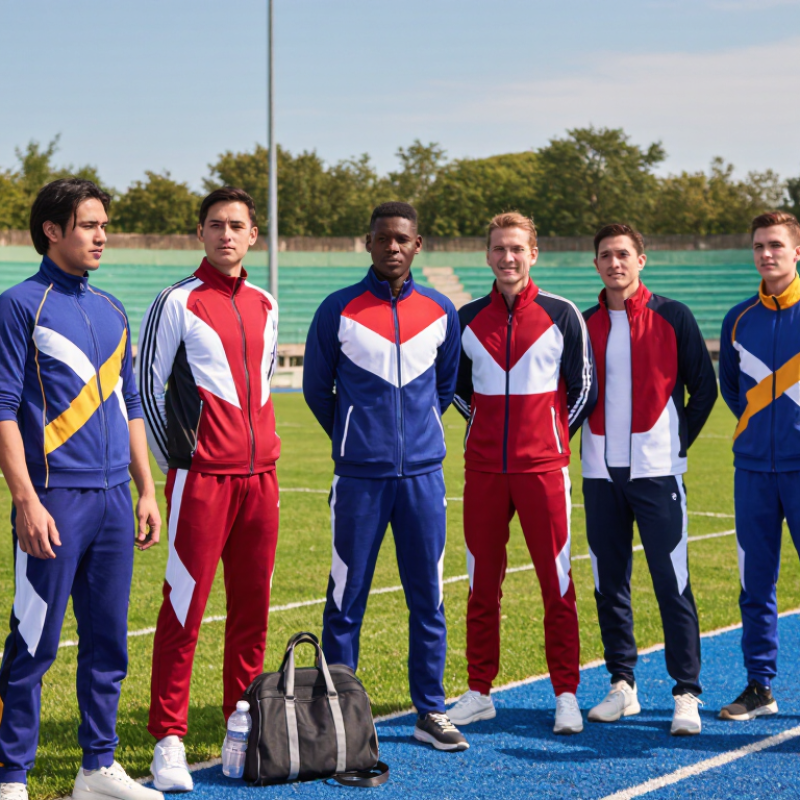
Custom athletic tracksuits are coordinated warm-up garments designed for a specific team. They usually include a zip jacket and matching trousers. Teams choose the colors, logos, names, numbers, and fit. The result is more than matching clothing. It creates a visible team identity before competition begins.
Modern tracksuits often use polyester blends, mesh panels, stretch inserts, and moisture-managing finishes.
Textile Exchange’s Materials Market Report 2024 reports that polyester made up about 57% of global fiber production in 2023. This explains its common use in sportswear, but recycled content and durability still need careful checking. The European Committee for Standardization also emphasizes garment safety, labeling, and material performance through relevant textile standards. Those details matter during travel, warm-ups, and outdoor training.
Custom design can solve practical problems. A tapered leg reduces fabric drag. A full-length zipper helps athletes regulate heat. Reinforced seams may withstand repeated washing. However, a perfect digital mock-up can still feel wrong on a real athlete. Sizing samples should be tested during movement, not only while standing.
Tips: Request physical samples before ordering. Test the jacket over a training shirt. Check zipper comfort, pocket depth, seam strength, and colorfastness after washing. Keep sponsor or team graphics readable from several meters away. Avoid excessive decoration; it can increase weight and complicate repairs. Teams should also record athlete measurements carefully, because “standard fit” is rarely standard for everyone.
Why Choose Custom Athletic Tracksuits for Teams?
How Custom Tracksuits Strengthen Team Identity
A team becomes recognizable before the game begins. Matching tracksuits create that moment in the parking lot, hallway, or warm-up area. Consistent colors, names, numbers, and placement make players look connected without forcing identical personalities. A well-designed jacket can also reflect local colors, school history, or a meaningful symbol. Small details matter.
Practical choices strengthen that identity. Coaches and team managers should request a physical sample before ordering every size. Fabric weight, zipper quality, stitching, and color accuracy can look different on a screen. A clear size chart reduces uncomfortable exchanges. Roomy sleeves help athletes move, while breathable panels support warm-up sessions. Personalization should remain readable from several meters away. Too many graphics weaken the message.
The process can reveal useful flaws. One team may discover that its chosen lettering disappears under stadium lights. Another may find that bright colors fade faster after repeated washing. These are not minor issues. They affect confidence and appearance throughout a season. Using color references, care instructions, and written approval creates a more reliable order. Team members can also vote on design options, giving the tracksuit emotional value beyond its fabric. It becomes a shared visual language. That language may still need revision. Teams change, and their identity should have room to change with them.
| Identity Dimension | Custom Tracksuit Application | Team Identity Benefit | Practical Evaluation |
|---|---|---|---|
| Team Colors | Use a consistent color palette across jackets, trousers, trims, and printed details. | Creates an immediately recognizable visual connection between players, coaches, and supporters. | Check whether the selected colors match the team’s existing uniforms, signage, and digital materials. |
| Logo and Emblem Placement | Add the team emblem through embroidery, heat transfer, screen printing, or sublimation. | Gives every member a shared symbol that represents team membership and collective purpose. | Confirm that the emblem remains legible at its intended size and is positioned consistently. |
| Player Identification | Include player names, squad numbers, positions, or role labels where appropriate. | Balances individual recognition with a unified team appearance. | Review spelling, number placement, font readability, and consistency across all garments. |
| Shared Appearance | Apply the same design structure to athletes, coaching staff, substitutes, and support personnel. | Makes the wider organization look coordinated and reinforces a sense of belonging. | Compare garment colors, logos, and design details across every participant group. |
| Design Consistency | Use one approved layout for collar details, sleeve accents, side panels, piping, and typography. | Reduces visual fragmentation and helps the team present a professional image. | Approve a digital sample before production and compare finished garments with the approved design. |
| Functional Fit | Select suitable cuts, stretch fabrics, zip details, pockets, and layering options for training or travel. | Shows that the team identity is supported by practical performance needs rather than appearance alone. | Test mobility, comfort, pocket access, zipper operation, and fit during typical team activities. |
| Group Visibility | Use coordinated tracksuits for arrivals, warm-ups, tournaments, travel, interviews, and award ceremonies. | Helps teammates and spectators identify the group quickly in busy public or sporting environments. | Evaluate visibility from a normal viewing distance and under indoor and outdoor lighting. |
| Long-Term Recognition | Retain signature colors, emblem placement, and recognizable design elements across future apparel updates. | Builds continuity between seasons while allowing new players and staff to join the same visual tradition. | Document the approved colors, artwork files, measurements, and decoration specifications for future orders. |
| Team Culture | Add meaningful phrases, founding dates, regional references, or values when they fit the design. | Transforms the tracksuit from ordinary sportswear into a visible expression of shared history and values. | Confirm that every slogan, date, symbol, and language choice has been reviewed by the team. |
Evaluation focus: visual consistency, member recognition, practical comfort, public visibility, and continuity across team seasons.
Custom athletic tracksuits can support performance when design starts with movement, not decoration. During warm-ups, athletes need warmth without restricted shoulder rotation. A tapered cut can reduce loose fabric near the feet, especially during drills. Fit matters. Teams should test prototypes while sprinting, stretching, and sitting, rather than judging them on hangers alone.
Fabric choice changes comfort quickly. A breathable knit can move moisture away from the skin, while mesh panels can release heat around the back and underarms. In cold conditions, a brushed inner layer may help muscles stay ready. Water-resistant outer fabric can protect against light rain, but it may feel too warm indoors. That trade-off deserves honest testing.
Small details count. Cuffs should sit securely without pressing the wrists. Zippers should open smoothly with cold hands.
Team colors can improve recognition during crowded training sessions. Reflective trim may also increase visibility during early morning runs, when natural light is limited. Personalized sizing helps reduce distractions caused by sleeves, waistbands, or excess fabric. A useful warning remains: the first sample may feel wrong. Feedback from athletes, coaches, and garment technicians should guide revisions. A striking design can still fail if it ignores heat, motion, or repeated washing. Practical testing is less glamorous, but it reveals what sketches cannot.
Team customization now goes beyond matching colors. Teams can choose lightweight polyester, recycled fibers, mesh panels, and brushed interiors for different training conditions. Textile Exchange’s 2024 Materials Market Report estimated global fiber production reached 124 million tonnes in 2023, while polyester remained the dominant fiber. Material selection deserves careful attention.
Fit matters. Coaches can select standard, slim, relaxed, or women-specific cuts, plus youth and extended sizes. A useful fitting session checks shoulder movement, waistband pressure, and sleeve length. Measure twice. A tracksuit should allow a goalkeeper to stretch without exposing the midriff. Adjustable cuffs, zip pockets, reflective trims, and breathable side panels add practical value.
Visual options include team colors, gradient panels, player numbers, names, position labels, and embroidered or heat-applied badges. Full-surface sublimation can create detailed graphics without heavy layers, while embroidery gives a textured, formal appearance. According to the Sports & Fitness Industry Association’s 2024 participation report, 242.6 million Americans participated in at least one sport or fitness activity in 2023, showing the broad demand for functional athletic clothing. However, customization can become excessive. Tiny sponsor-style details may disappear from a distance. Bright colors may also change under stadium lighting. A sample garment, wash test, and movement trial should be completed before bulk production. Mistakes happen. Good specifications reduce them.
Why Choose Custom Athletic Tracksuits for Teams?
How to Choose the Right Tracksuits for a Team
Choosing team tracksuits should begin with use, not appearance. Consider training intensity, local weather, travel routines, and storage space. A lightweight polyester shell suits rainy commutes, while brushed fabric helps during cold outdoor sessions. The best fit allows shoulder movement without loose cuffs catching equipment.
Check fabric performance before approving bulk production. Ask for test results covering colorfastness, seam strength, pilling, and moisture management. The global sports apparel market was estimated at 248.5 billion dollars in 2023, according to Grand View Research. That growth increases material choices, but it can also make selection confusing. A supplier’s sample should survive washing, stretching, and repeated zipper use. One fitting is rarely enough.
Sustainability also needs evidence. Textile Exchange reported global fiber production at 124 million tonnes in 2023. It projects about 160 million tonnes by 2030. Ask whether recycled content is certified and traceable. Avoid vague “eco-friendly” claims. Measure players across chest, waist, hip, and inseam, then compare those figures with the actual size chart. Leave room for a base layer, but not enough for fabric to flap during sprints. Custom graphics should remain readable after washing. I have learned that the first sample often looks impressive but feels wrong in motion. That is worth questioning. A practical team test, with players wearing the tracksuit for a full training session, can reveal heat buildup, noisy fabric, or uncomfortable collars.
A practical team tracksuit decision should balance performance, comfort, durability, appearance, and customization. This 100-point planning framework gives the greatest weight to fit and mobility, fabric performance, and durability because these factors directly affect training and match-day use. Custom colors, numbers, and names then improve team identity and reduce mix-ups.
Match the fabric to training conditions. Breathable knit helps move moisture away from skin. Mesh panels release heat around the back and underarms. Brushed interiors suit colder sessions. Water-resistant shells help during light rain, but may feel hot indoors.
The fit should allow shoulder rotation, stretching, and sitting. Choose standard, slim, relaxed, women-specific, youth, or extended sizing. Leave room for a base layer. Avoid loose fabric near the feet. Test movement, not just appearance.
Teams can select colors, gradients, names, numbers, and position labels. They can also add zip pockets, adjustable cuffs, and reflective trims. Detailed graphics may use full-surface printing. Embroidery creates a raised, formal texture. Too many details can look unclear.
Athletes should sprint, stretch, sit, and complete a full training session. Check shoulder movement, waistband pressure, sleeve length, and collar comfort. Test zippers with cold hands. Wash the sample repeatedly. Test twice. The first sample may still feel wrong.
Team colors help players recognize one another in crowded areas. Reflective trim can improve visibility during low-light morning runs. Test bright colors under different lighting. Stadium lights may change their appearance. A striking color is not always practical.
Measure the chest, waist, hips, and inseam. Compare these measurements with the actual size chart. Check sleeve length and waistband pressure. A goalkeeper should stretch without exposing the midriff. Measurements can still be imperfect, so include athlete feedback.
Ask whether recycled fibers are certified and traceable. Request clear material information from the supplier. Avoid vague environmental claims. Check durability through washing, stretching, and repeated use. A recycled fabric is not automatically the best choice.
Request testing for colorfastness, seam strength, pilling, and moisture management. Inspect the fabric after washing. Check whether graphics remain readable. Test zippers and cuffs repeatedly. Good specifications reduce mistakes, but they cannot replace real athlete feedback.
Custom athletic tracksuits are coordinated team outfits designed to combine comfort, performance, and a unified appearance. Unlike standard sportswear, they can be tailored to reflect a team’s colors, logos, names, numbers, and overall style. Wearing matching tracksuits helps athletes feel connected, builds team identity, and presents a professional image during training, travel, warm-ups, and competitions.
Design choices can also support athletic performance through lightweight, breathable, stretchable, and weather-appropriate fabrics. Teams may choose different jacket styles, trousers, fits, color combinations, personalization methods, and sizing options to meet their needs. When selecting custom athletic tracksuits, teams should consider the sport, climate, activity level, budget, durability, comfort, and ease of care. The right tracksuits should allow unrestricted movement while maintaining a consistent appearance that encourages confidence, unity, and team spirit.