Factory direct from Sialkot, Pakistan ·MOQ from 20 pcs ·OEM, ODM & Private Label ·Shipping to 30+ countries
0%

Choosing Performance activewear manufacturing is not simply about placing a logo on stretch fabric. It is about building garments that survive movement, sweat, washing, and repeated pressure. A runner notices a twisted waistband after five kilometers. A trainer feels a weak seam during a deep squat. Small failures become visible quickly.

The right manufacturing partner connects fabric science with practical production experience. Teams must evaluate four-way stretch, moisture management, abrasion resistance, colorfastness, and recovery after washing. They should also inspect stitching density, seam placement, elastic tension, and pattern balance. These details influence comfort and performance more than attractive samples alone. Factory communication matters too. Clear tech packs, controlled prototypes, and documented quality checks reduce costly surprises.

Yvon Chouinard, founder of Patagonia and a respected apparel industry pioneer, offered a principle that still fits this discussion: “Build the best product, cause no unnecessary harm.” That idea encourages manufacturers to test products honestly and question unnecessary complexity. Recycled fibers may sound impressive, but they still require suitable performance testing. A low-impact claim means little if the garment fails after several washes.

Performance activewear manufacturing can improve durability, fit, and brand credibility when decisions are evidence-based. However, no supplier is perfect. Sampling can hide production weaknesses, and laboratory results may not reflect every athlete’s experience. Buyers should inspect factories, review test records, and request realistic wear trials. The goal is not flawless marketing. It is dependable clothing that performs well in real life.
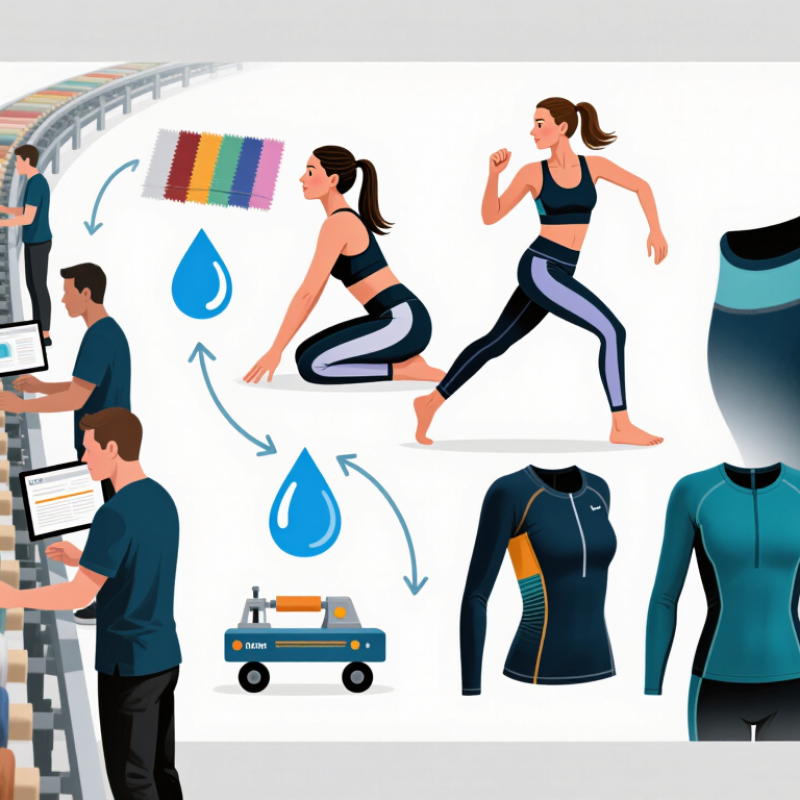
Why Choose Performance Activewear Manufacturing?

What Is Performance Activewear Manufacturing?

Performance activewear manufacturing is the controlled process of creating sports garments for movement, comfort, and durability. It combines textile selection, pattern engineering, sewing, testing, and quality control. Unlike ordinary apparel, activewear must manage sweat, friction, stretching, and repeated washing.

A running shirt may use lightweight knitted fabric, flat seams, and targeted ventilation panels. Training leggings need stretch recovery, stable waist support, and secure stitching. The purpose is practical performance, not decoration alone.

Manufacturers usually begin by defining the garment’s intended activity and performance requirements. Fiber blends, fabric weight, opacity, and drying speed are then evaluated.

Cutting teams inspect fabric rolls before production begins. Sewing operators monitor seam strength and stitch density. Samples are worn during movement tests because a garment can pass inspection yet feel restrictive. That detail matters. Reliable production also requires documented measurements, traceable batches, and careful chemical handling. Requirements differ by market, so manufacturers should verify applicable labeling, safety, and environmental rules before shipment.

The process is rarely perfect. A first sample may twist at the side seam or lose shape after washing. Testing reveals problems. Experienced technicians adjust the pattern, fabric tension, or seam construction.

A smooth appearance does not prove lasting performance. In practical development, small defects often expose larger process weaknesses. Even a waistband that slips slightly can change how an athlete moves, especially during long training sessions. Final inspections may include measurement checks, visual reviews, wash testing, and packaging audits.

How Performance Activewear Is Designed and Produced

Performance activewear begins with a clear understanding of movement. Designers study running, training, stretching, and recovery positions. Fit comes first.

They select fabrics according to activity, climate, and expected intensity. Lightweight knits may support ventilation, while denser fabrics can improve coverage. Pattern makers place stretch panels around shoulders, hips, knees, and elbows. They also consider sweat zones, friction points, and pocket placement. Early prototypes reveal practical problems that sketches cannot show. A waistband may roll. A seam may irritate the skin. Small adjustments can change comfort significantly.

Production requires controlled steps and experienced inspection. Fabric rolls are checked for weight, stretch recovery, shade consistency, and surface defects. Cutting must follow grain direction and measured size specifications. Sewing teams use suitable thread, stitch density, and flat seams where friction is likely. Quality staff examine seam strength, measurements, print adhesion, and moisture movement. Wash testing helps identify shrinkage and color changes before larger production begins.

The process is not flawless. A successful sample may still feel restrictive during real training. Human bodies vary more than size charts suggest. That is why factories can use pilot runs, wearer feedback, and repeated fit reviews. Records of defects help teams adjust cutting, sewing, and finishing methods. Better results often come from noticing what went wrong, not pretending everything worked perfectly.

Which Materials and Technologies Improve Activewear Performance?

Why Choose Performance Activewear Manufacturing?

Which Materials and Technologies Improve Activewear Performance?

Performance activewear depends on material selection, not slogans. Textile Exchange’s Materials Market Report 2024 recorded 124 million tonnes of global fiber production in 2023. Polyester represented about 59% of that volume. Its strength, light weight, and quick drying make it practical for training garments. However, ordinary polyester can retain odor and feel hot during intense sessions.

Manufacturers now combine recycled polyester, nylon, elastane, and engineered knitting structures. Elastane supports stretch during squats and running. Nylon improves abrasion resistance around waistbands and inner thighs. Mesh zones can release heat from the back and underarms. Moisture-wicking finishes move sweat across the fabric surface, where evaporation can occur faster. AATCC TM195 helps measure liquid moisture management. ASTM D4966 evaluates abrasion resistance. These tests add evidence, but they cannot fully predict comfort on a humid afternoon. I have seen fabrics pass laboratory testing yet feel clingy during real workouts.

Tips: Request test results for stretch recovery, pilling, colorfastness, and drying time. Ask factories to test finished garments, not only fabric rolls. Include wearer trials with different body types and movement patterns. Review fiber claims carefully. Recycled content may reduce dependence on virgin resources, but it does not automatically solve shedding or end-of-life problems. No fabric is perfect. Better manufacturing keeps measuring trade-offs.

Why Choose Performance Activewear Manufacturing? - Which Materials and Technologies Improve Activewear Performance?

Performance Dimension Material or Manufacturing Technology How It Works Typical Performance Benefit Recommended Application Useful Validation Method
Moisture Management Polyester microfiber or polyester blends Fine fibers increase surface area and help transport liquid moisture across the fabric surface, where it can evaporate more quickly. Fast drying and improved moisture spreading, depending on yarn structure, fabric weight, and finishing. Running tops, training shirts, base layers, and indoor fitness apparel. Vertical wicking test, drying-time test, and moisture-management evaluation.
Stretch and Freedom of Movement Elastane blended with polyester or nylon Elastane provides elastic recovery, while the outer fiber contributes durability, color retention, and hand feel. Improved four-way stretch, fit retention, and movement comfort. Yoga wear, compression garments, cycling apparel, and fitted training clothing. Stretch and recovery testing in both wale and course directions.
Durability High-tenacity nylon or polyester yarns Stronger synthetic filaments resist repeated tension, abrasion, and laundering better than many low-strength fibers. Higher resistance to fabric tearing, seam damage, and surface wear. Outdoor training apparel, leggings, sports uniforms, and garments exposed to equipment friction. Martindale or Wyzenbeek abrasion testing, tear-strength testing, and seam-strength testing.
Breathability Knitted mesh, engineered ventilation zones, or spacer fabrics Open structures and targeted ventilation areas allow more air exchange than dense, compact constructions. Higher air permeability and reduced heat accumulation in high-sweat zones. Back panels, underarm areas, running singlets, and high-intensity training garments. Air-permeability testing and thermal comfort assessment.
Thermal Regulation Merino wool, wool blends, or engineered thermal knits Wool fibers can absorb moisture vapor while maintaining insulation; engineered knit structures can balance warmth and air movement. Improved comfort across changing activity levels and temperatures. Hiking base layers, winter training apparel, travel clothing, and moderate-intensity outdoor use. Thermal resistance, evaporative resistance, and controlled-environment wear testing.
Odor Control Merino wool or textile treatments based on silver, zinc, or other antimicrobial systems Fiber properties or antimicrobial finishes can reduce the growth of odor-producing microorganisms, subject to test conditions and wash durability. Reduced odor development during repeated wear; performance varies by treatment and laundering. Base layers, travel activewear, socks, and garments designed for repeated use. Antimicrobial activity testing, odor-panel testing, and wash-cycle durability testing.
UV Protection Dense polyester or nylon constructions, solution-dyed yarns, and UV-absorbing finishes Fiber type, fabric coverage, color, and finishing can reduce ultraviolet transmission through the garment. Higher ultraviolet protection factor when verified under a recognized UV-protection standard. Outdoor running, golf, hiking, watersports, and sun-protective tops. UPF testing according to applicable textile UV-protection standards.
Seam Comfort Flatlock seams, bonded seams, and coverstitch construction These constructions reduce bulky seam allowances and minimize direct rubbing against the skin. Lower risk of chafing and improved next-to-skin comfort. Long-distance running apparel, compression wear, cycling clothing, and base layers. Seam-profile inspection, seam-strength testing, and controlled wear trials.
Compression and Support Graduated knit structures with elastane-containing yarns Engineered tension zones create different levels of pressure or support across selected body areas. More consistent fit, muscle support, and garment stability; pressure claims require product-specific testing. Compression tights, support tops, recovery garments, and cycling apparel. Pressure mapping, stretch-recovery testing, and fit evaluation on representative body sizes.
Lightweight Performance Fine-gauge knitted fabrics and lightweight woven constructions Reduced fabric mass lowers garment weight while maintaining the required level of coverage and strength. Lower garment weight and easier packability, balanced against opacity and durability requirements. Running singlets, summer training apparel, race kits, and travel activewear. Fabric mass-per-area measurement, opacity testing, and durability testing.
Water Resistance Durable water-repellent finishes or laminated membrane systems Surface treatments make water bead and roll off, while membranes can block liquid water and allow some vapor transfer. Improved protection from light rain and surface wetting; breathability depends on construction and conditions. Windbreakers, trail-running shells, cycling jackets, and outdoor warm-up layers. Spray-rating, hydrostatic-pressure, and moisture-vapor-transmission testing.
Sustainable Manufacturing Recycled polyester or recycled nylon with optimized cutting and production planning Recycled feedstocks can reduce reliance on virgin petrochemical resources, while efficient marker planning reduces cutting waste. Potentially lower material waste and reduced use of virgin inputs; environmental impact depends on the full supply chain. Performance apparel collections requiring documented material sourcing and waste control. Chain-of-custody documentation, material certification, cutting-waste records, and life-cycle assessment.
Colorfastness Solution-dyed synthetic yarns or controlled dyeing and finishing processes Solution dye is added before extrusion, while controlled conventional dyeing secures color within the textile through heat and chemical management. Better resistance to fading, crocking, perspiration, and repeated washing when properly specified. High-use uniforms, swimwear, training apparel, and brightly colored activewear. Colorfastness to washing, perspiration, water, light, and rubbing.
Fit Consistency Digital pattern engineering, 3D fit simulation, and graded size specifications Digital tools help evaluate garment balance, stretch behavior, and size grading before physical production. More consistent sizing, fewer fit corrections, and reduced sampling waste. Multi-size collections, technical leggings, fitted tops, and complex panel designs. Measurement audits, fit sessions, size-set approval, and post-wash dimensional stability testing.
Performance results vary according to fiber composition, yarn specification, fabric construction, garment design, finishing process, care instructions, and test conditions. Product claims should be confirmed through representative laboratory and wear testing.

What Benefits Does Specialized Manufacturing Provide?

Performance activewear manufacturing demands more than attractive patterns and flexible fabric. Specialized manufacturers understand how polyester blends, elastane ratios, and knit structures behave during movement. They can select materials for breathability, recovery, abrasion resistance, and controlled compression.

Small choices matter. A poorly balanced seam may rub after thirty minutes of running.

Technical factories usually combine pattern engineering with practical wear testing. They examine stretch in several directions, wash samples repeatedly, and inspect seam strength under tension. Fit specialists may test garments on different body shapes and movement patterns. This process reveals issues that a digital pattern cannot show.

For example, a waistband may feel secure while standing but roll during squats. Adjustments then involve stitch density, panel placement, or elastic width.

Specialized production also improves consistency between samples and larger orders. Documented measurements, fabric inspection, color checks, and production records make problems easier to trace. Quality teams can identify whether shrinkage began with the fabric, finishing, or washing process.

Still, no manufacturing method is flawless. A sample can pass testing and feel uncomfortable in real training. That possibility deserves honest review. Useful manufacturers welcome feedback, revise specifications, and explain limitations instead of promising perfection. Their experience becomes valuable when it supports clearer decisions, safer testing, and garments that perform reliably in everyday use.

How to Evaluate a Performance Activewear Manufacturer?

Choosing performance activewear manufacturing requires more than checking a factory’s product catalogue. The manufacturer must prove consistent fabric, construction, testing, and communication. Ask for test reports covering moisture management, stretch recovery, pilling, colourfastness, and seam strength. Request samples after repeated washing, not only fresh samples from a showroom.

Textile Exchange’s Materials Market Report 2024 states that polyester represented about 57% of global fibre production in 2023. It also reported that recycled polyester accounted for roughly 12% of polyester output. These figures make fibre traceability important. A reliable manufacturer should identify fibre content, origin, recycled inputs, and processing locations. The International Labour Organization also highlights workplace safety and fair conditions as essential parts of responsible supply chains. Factory audits matter, but documents can become outdated.

Tips: Visit the production floor when possible. Watch how workers handle cutting, bonding, and final inspection. Check whether measurement tolerances are written clearly. Ask who controls fabric defects and what happens after a failed test. A strong partner will explain problems without hiding them.

Do not judge capability from one excellent prototype. Review several production batches. Compare colour shade, waistband recovery, seam placement, and packaging accuracy. A factory may pass an audit and still miss a delivery or alter fabric weight. That uncomfortable possibility deserves discussion before signing. I would also request a small pilot order. It reveals more than polished presentations, although even a pilot cannot predict every seasonal challenge.

Why Choose Performance Activewear Manufacturing?

How to Evaluate a Performance Activewear Manufacturer

A capable performance activewear manufacturer should provide measurable fabric and production results. The chart converts common procurement benchmarks into a comparable 0–100 scale: UPF 50+ protection equals approximately 98% UV reduction, while colorfastness and pilling targets of Grade 4 equal 80% of a Grade 5 scale. Dimensional stability and stretch recovery should be confirmed through independent laboratory testing and production samples.

FAQS

What is performance activewear manufacturing?

It is the controlled production of sports garments for movement, comfort, and durability. It combines fabric selection, pattern engineering, sewing, testing, and quality checks. Decoration is secondary.

How are activewear fabrics selected?

Manufacturers consider activity, climate, fabric weight, stretch recovery, opacity, and drying speed. Lightweight knits can improve ventilation. Denser fabrics may provide better coverage and abrasion resistance.

How does design support different movements?

Designers study running, training, stretching, and recovery positions. Pattern makers place stretch panels near shoulders, hips, knees, and elbows. They also review sweat zones, friction points, and pocket positions.

What problems can prototypes reveal?

A waistband may roll during squats. A side seam may twist or irritate the skin. A sample can look correct yet feel restrictive during real training.

How is garment quality tested?

Teams inspect measurements, seam strength, stitch density, fabric defects, and color consistency. They may conduct movement trials, repeated washing, and stretch testing. A smooth surface proves very little.

Why are wash tests important?

Washing can reveal shrinkage, color changes, shape loss, and weakened seams. Testing before larger production helps identify defects earlier. Problems still happen.

What benefits does specialized manufacturing provide?

Experienced teams understand knit structures, elastane ratios, breathability, compression, and recovery. They can adjust elastic width, panel placement, fabric tension, and stitch density. Small changes can improve comfort after thirty minutes of running.

How can manufacturers improve consistency?

They use documented measurements, fabric inspections, batch records, and production checks. These records help identify whether problems began during fabric production, finishing, sewing, or washing. Feedback matters more than perfect promises.

What should manufacturers verify before shipment?

They should review applicable labeling, safety, environmental, packaging, and measurement requirements. Rules can differ between markets. Careful verification reduces avoidable problems, though it cannot eliminate every mistake.

Conclusion

Performance activewear manufacturing is the specialized process of developing and producing sportswear that supports comfort, mobility, durability, and performance during physical activity. It combines functional design with carefully selected materials, advanced construction methods, and quality control. From moisture-wicking fabrics and breathable mesh to stretch fibers, odor-resistant treatments, and seamless or reinforced stitching, every detail is chosen to improve the wearer’s experience.

A professional manufacturer can help transform a product concept into reliable activewear through sampling, pattern development, fabric testing, size grading, and efficient production. Specialized manufacturing also provides better consistency, improved garment performance, reduced material waste, and greater flexibility for custom requirements. When evaluating a Performance activewear manufacturing partner, businesses should consider technical expertise, material options, production capacity, quality assurance procedures, communication, lead times, and commitment to responsible practices. Choosing the right partner ensures that finished garments meet both functional expectations and customer needs.

Ethan Caldwell

Ethan Caldwell

Ethan Caldwell is a dedicated marketing professional with a strong understanding of the company’s products, services, and evolving customer needs. Through thoughtful research and clear communication, he regularly contributes expert articles to the company’s professional blog, helping readers better......