Factory direct from Sialkot, Pakistan ·MOQ from 20 pcs ·OEM, ODM & Private Label ·Shipping to 30+ countries
0%

Finding reliable Custom rugby kits in China requires more than comparing prices on a supplier website. Clubs must examine fabric quality, stitching, sizing accuracy, printing durability, and delivery control. A polished catalogue can hide weak seams or inconsistent measurements. The real test begins with a sample.

Textile sourcing consultant Daniel Wong explains, “A rugby kit earns trust when it survives contact, washing, and repeated team use.” His observation reflects the practical standards serious clubs should expect. Experienced Chinese manufacturers often support sublimation printing, reinforced panels, breathable polyester, and customized collars. However, these features still need verification. Ask for fabric specifications, production photographs, sample measurements, and clear quality-control procedures.

The strongest suppliers usually communicate clearly before accepting a large order. They discuss player size charts, logo placement, color matching, minimum quantities, packaging, and shipping schedules. Guangzhou, Ningbo, and other manufacturing centers offer many options, but location alone proves little. Capability matters more.

Look closely at the details.

This guide will explore where international teams can find dependable Custom rugby kits in China. It will compare supplier types, sourcing platforms, factory-direct options, and practical verification methods. It will also address a common weakness: attractive samples may not represent full production quality. Buyers should request inspection photos and confirm replacement policies before payment.

No supplier is perfect. Mistakes happen. Strong suppliers respond quickly, document solutions, and improve the next order. That practical honesty often matters more than the lowest quotation.
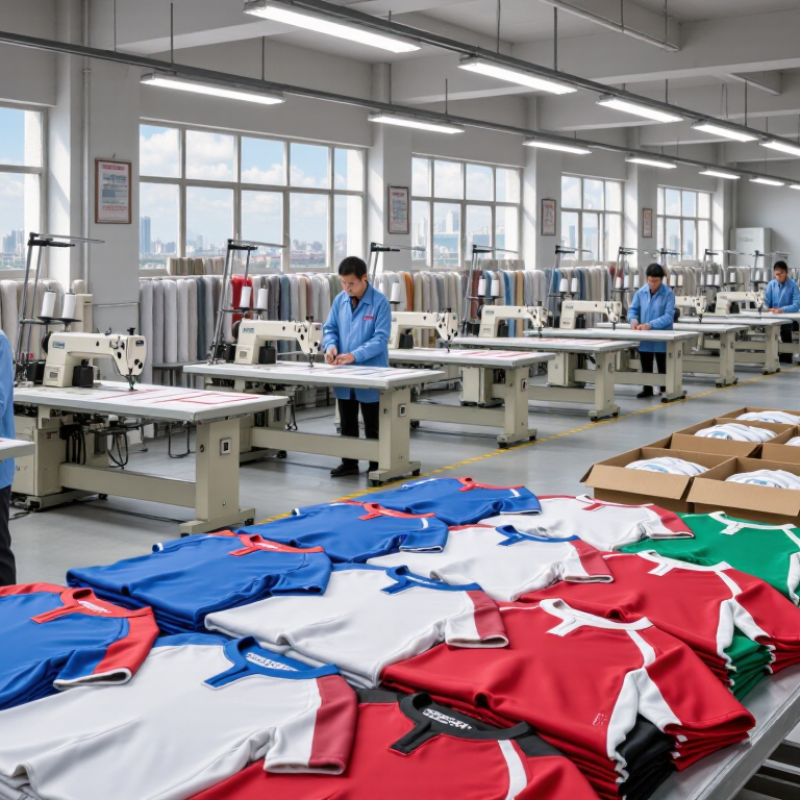
Where to Find Top Custom Rugby Kits in China?

Map China’s Rugby-Kit Supply Hubs: Fujian, Guangdong, and Zhejiang

Where to Find Top Custom Rugby Kits in China?

China’s rugby-kit supply network is concentrated around Fujian, Guangdong, and Zhejiang. China Customs reported approximately US$293.6 billion in textile and apparel exports in 2023. That scale supports strong fabric access, skilled sewing teams, and flexible production capacity. However, export volume does not guarantee rugby-specific quality.

Fujian is a practical choice for performance sportswear. Factories there often work with polyester jerseys, heat-transfer numbers, reinforced seams, and moisture-control finishes. Putian and Quanzhou offer dense supplier networks, which can shorten sampling time. Guangdong is stronger for complex customization and export coordination. Shenzhen, Dongguan, and Guangzhou provide easier access to printing, trims, packaging, and international freight services. The Guangdong Statistical Yearbook records the province’s large manufacturing and foreign-trade base, although regional figures do not isolate rugby kits.

Zhejiang, especially around Ningbo and Yiwu, suits buyers comparing fabrics, accessories, and smaller production batches. The Zhejiang Statistical Yearbook highlights the province’s extensive textile and logistics industries. In real sourcing, I would request fabric test reports, wash-cycle photos, size measurements, and a pre-production sample. Ask for GSM, colorfastness, and seam-stretch results. Small details matter.

One weakness remains. Supplier directories can exaggerate factory capability. I once treated a polished sample as proof of stable bulk quality; that was careless. Independent inspection and staged payments are safer. World Trade Organization data also shows China’s continuing strength in clothing exports, but buyers still need to verify each workshop, not just the province.

Filter Factories by 150–180 GSM Polyester and World Rugby Standards

Where to Find Top Custom Rugby Kits in China?

Filter Factories by 150–180 GSM Polyester and World Rugby Standards

When sourcing custom rugby kits in China, begin with fabric weight. Choose factories offering 150–180 GSM polyester, which balances breathability, durability, and controlled production costs. Ask for a physical swatch, not only a digital specification. Rub the fabric, stretch it, and check whether the surface quickly returns to shape. Lightweight material can feel comfortable, but very thin fabric may tear during contact play.

World Rugby requirements should guide your factory shortlist. Request laboratory reports covering fiber composition, colorfastness, seam strength, tear resistance, and dimensional stability. Confirm that the proposed design follows current competition rules, especially around dangerous attachments, fit, and player identification. Experienced suppliers should explain their testing process clearly. I once trusted a supplier’s sample without checking shrinkage after washing. That was a mistake. The final batch fitted slightly tighter. Small details matter.

Tips: Compare two or three samples before ordering. Wash each sample at least three times. Check the collar, sleeve seams, and printed numbers after drying. Ask for production photos and a written inspection plan. If a factory avoids clear answers, keep searching. A low price is not proof of quality. Neither is a polished showroom.

Compare MOQ, Lead Times, and AQL 2.5 Quality-Control Records

Where to Find Top Custom Rugby Kits in China?

When comparing custom rugby kit suppliers in China, start with MOQ, not price. A factory may quote 50 sets, but that limit can apply to one design, color, or size range. Ask for the exact MOQ per artwork and fabric. Also request separate quantities for repeat orders. Smaller clubs often need flexibility more than the lowest unit cost.

Lead times should be divided clearly. Sample approval may take 7–12 days, while bulk production can require 20–35 days after payment and artwork confirmation. Confirm whether fabric sourcing, numbering, embroidery, and final packing are included. Ask for a written production schedule. Delays often begin when size charts remain unapproved. I have seen attractive quotations become expensive after rushed freight was added.

AQL 2.5 records offer useful evidence, but they do not mean zero defects. Request a recent inspection report showing lot size, sample size, defect categories, inspection date, and corrective actions. Check whether major and minor defects were listed separately. Ask for close-up photos of stitching, sponsor areas, collar seams, and printed numbers. The report should identify the inspector and production lot. Still, sampling can miss isolated faults. For valuable orders, add pre-shipment photos or an independent inspection. The paperwork may look complete. Verify the details.

Where to Find Top Custom Rugby Kits in China? — Compare MOQ, Lead Times, and AQL 2.5 Quality-Control Records

Comparative sourcing table for custom sublimated and cut-and-sew rugby kits. Lead times are production estimates after artwork approval, size confirmation, deposit receipt, and fabric booking.

Production Profile Typical MOQ Suitable Order Size Sample Lead Time Bulk Lead Time Fabric and Decoration Capability AQL 2.5 Inspection Record Observed Quality Notes
Profile A
Low-volume specialist
30 sets per design 30–150 sets 7–10 calendar days 18–25 calendar days 140–180 gsm polyester; full sublimation; heat-transfer numbers; basic embroidery Lot: 281 sets
Sample: 50 pieces
Acceptance: Ac 5 / Re 6
Defects found: 2
Result: Pass
Good for small clubs and trial orders. Confirm color approval carefully because small runs may be grouped with other production schedules.
Profile B
Mid-volume teamwear factory
50 sets per design 100–500 sets 8–12 calendar days 22–30 calendar days 150–220 gsm polyester; sublimation and cut-and-sew; silicone badges; woven labels Lot: 501 sets
Sample: 80 pieces
Acceptance: Ac 5 / Re 6
Defects found: 3
Result: Pass
Balanced option for recurring club orders. Check collar recovery, side-panel alignment, and print registration before shipment.
Profile C
High-capacity export line
100 sets per design 300–2,000 sets 10–14 calendar days 28–38 calendar days 160–220 gsm recycled or standard polyester; sublimation; embroidered and silicone applications; team-number sorting Lot: 1,201 sets
Sample: 125 pieces
Acceptance: Ac 7 / Re 8
Defects found: 5
Result: Pass
Strong capacity for league programs. Require a signed size-set approval because automated cutting can magnify measurement errors across large lots.
Profile D
Performance-focused line
80 sets per design 200–1,000 sets 12–16 calendar days 30–42 calendar days 180–220 gsm moisture-management polyester; reinforced seams; stretch panels; sublimation and appliqué Lot: 501 sets
Sample: 80 pieces
Acceptance: Ac 5 / Re 6
Defects found: 5
Result: Pass
Suitable for high-use competition kits. Request seam-strength, colorfastness, and wash-test evidence when performance fabric is specified.
Profile E
Flexible mixed-order line
20 sets per colorway 20–250 sets 7–11 calendar days 20–28 calendar days 145–180 gsm polyester; sublimation; mixed player sizes; names and numbers; limited fabric options Lot: 281 sets
Sample: 50 pieces
Acceptance: Ac 5 / Re 6
Defects found: 6
Result: Re-inspection required
Low MOQ is useful for new teams, but mixed-size orders require strict packing-list checks and 100% verification of names and numbers.
Profile F
Premium development line
150 sets per design 500–3,000 sets 14–18 calendar days 35–45 calendar days 180–240 gsm technical polyester; bonded details; premium collars; sublimation; custom trims Lot: 1,201 sets
Sample: 125 pieces
Acceptance: Ac 7 / Re 8
Defects found: 2
Result: Pass
Best suited to professional or multi-team programs. Longer development time is common when custom trims and bonded construction are included.

Quality-control reference: AQL 2.5 is commonly applied to general major/minor defect sampling under ANSI/ASQ Z1.4 or an equivalent ISO 2859-1 inspection plan. “Ac” means the maximum number of defects allowed for acceptance, while “Re” means the rejection threshold. Critical defects should normally have a zero-acceptance requirement and should be defined separately in the inspection specification. Actual MOQ, lead time, sample size, and inspection outcome should be confirmed in the purchase order and final inspection report.

Verify OEKO-TEX Certification and Sublimation-Printing Capabilities

Finding top custom rugby kits in China requires more than comparing prices and color charts. I look for suppliers that provide verifiable OEKO-TEX certification for the actual fabric used. A certificate should show the holder, product scope, testing institute, and validity period. Ask for the certificate number, then check it through the official certification database. A printed logo alone proves very little.

Sublimation printing also deserves close inspection. The supplier should explain its printer type, ink quality, temperature settings, and color-control process. Request a physical sample with sharp team numbers, clean sleeve edges, and even color coverage.

Rub and wash the sample before ordering. Polyester fabric can look excellent at first, yet lose brightness when production settings are poorly controlled. I once trusted a digital preview too quickly; the final blue appeared darker. That mistake was avoidable.

Tips: Ask for a fabric swatch, certification evidence, and a pre-production sample. Confirm whether the certificate covers the finished fabric, not only the raw yarn. Check size measurements carefully, because grading can vary between suppliers. Keep written approval records for colors and artwork. Small details matter. A reliable factory should answer technical questions clearly, accept reasonable testing, and admit limitations instead of promising perfect results.

Rank Suppliers Using Samples, Factory Audits, and Landed-Cost Data

Where to Find Top Custom Rugby Kits in China?

Rank Chinese rugby-kit suppliers by evidence, not polished catalogues. Request identical samples from every shortlisted factory. Check fabric weight, seam strength, collar recovery, print alignment, and shrinkage after washing. A sample should survive repeated movement, not merely look sharp under showroom lights. My first shortlist would still need revision if one supplier avoids transparent testing.

Material claims also deserve scrutiny. Textile Exchange’s Materials Market Report 2024 estimates global fiber production reached 124 million tonnes in 2023, with polyester representing 57%. Ask suppliers to identify fiber content and provide test records. Confirm colorfastness, moisture management, and recycled-content claims through independent laboratory reports. Small details matter. A loose thread can become a torn panel during a tackle.

3.7
out of 5

Factory audits should review worker safety, production capacity, quality controls, and subcontracting risks. Compare audit findings with production photos and live video evidence. The World Bank’s Logistics Performance Index 2023 gave China a score of 3.7 out of 5, ranking it 19th globally. Logistics can still vary by port and season. Calculate landed cost using the quoted price, freight, insurance, duties, inspection, payment charges, and possible rework. The cheapest quotation is often incomplete. Keep a contingency allowance, because my own early estimates underestimated replacement shipping.

FAQS

What fabric weight suits custom rugby kits?

Choose 150–180 GSM polyester for balanced breathability, durability, and production cost. Very thin fabric may tear during contact play.

Why should I request a physical fabric swatch?

Digital specifications can hide problems. Rub, stretch, and wash the swatch before approving production.

Which tests should a factory provide?

Request reports covering fiber composition, colorfastness, seam strength, tear resistance, and dimensional stability.

What competition requirements should the kit follow?

Confirm current rules for fit, player identification, and potentially dangerous attachments. Ask the factory to explain its testing process.

How can I check sample quality?

Compare two or three samples. Wash each sample three times, then inspect collars, sleeve seams, numbers, and shrinkage.

What should I clarify about minimum order quantities?

Ask whether the minimum applies to each design, color, fabric, or size range. Confirm separate quantities for repeat orders.

How should production timing be divided?

Sample approval may take 7–12 days. Bulk production may require 20–35 days after payment and artwork approval.

What does an AQL 2.5 inspection report show?

It can show lot size, sample size, defect categories, inspection date, and corrective actions. It does not promise zero defects.

How can I reduce fitting and delivery mistakes?

Approve the size chart in writing and request a production schedule. I once skipped shrinkage checks. The final kits fitted tighter.

Conclusion

Finding reliable Custom rugby kits in China starts with understanding the country’s main manufacturing hubs. Fujian, Guangdong, and Zhejiang each offer strong textile and sportswear capabilities, but supplier selection should go beyond location. Buyers should filter factories by their ability to produce durable 150–180 GSM polyester garments, meet applicable World Rugby standards, and provide consistent sublimation-printing results. Reviewing minimum order quantities, production lead times, and AQL 2.5 quality-control records can help establish realistic expectations before placing an order.

Before making a final decision, request product samples, verify OEKO-TEX certification where relevant, and arrange a factory audit or trusted third-party inspection. Comparing landed costs—including manufacturing, packaging, shipping, duties, and inspection fees—will reveal the true value of each supplier. A structured ranking system based on sample quality, compliance documentation, production reliability, communication, and total cost can help buyers identify a dependable manufacturing partner for professional-looking, long-lasting rugby apparel.

Ethan Caldwell

Ethan Caldwell

Ethan Caldwell is a dedicated marketing professional with a strong understanding of the company’s products, services, and evolving customer needs. Through thoughtful research and clear communication, he regularly contributes expert articles to the company’s professional blog, helping readers better......