Choosing Basketball team uniforms is a practical decision, not merely a branding exercise. A jersey must survive repeated washing, sudden sprints, shoulder contact, and long tournament weekends. It should also help players feel connected before tipoff. Grand View Research reported that the global sports apparel market was valued at more than $200 billion in 2023, with performance clothing continuing to expand. Fortune Business Insights also identifies customization and team identity as important forces in sportswear purchasing.
Veteran basketball coach and analyst Jeff Van Gundy has often stressed, “The most important thing in basketball is the team.” That principle applies to uniform selection. Colors should represent the school or club clearly, while numbers must remain readable from the bleachers. Polyester mesh can improve airflow, but fabric weight, stitching, and fit still matter. A lightweight jersey may feel comfortable indoors, yet perform poorly in cold gyms or during travel. Small details matter.
Measure real athletes.
Do not rely only on a size chart. Ask players to move, raise their arms, and sit before ordering a full set. Check league rules, sponsor placement, washing instructions, and replacement availability. Sustainability reports increasingly highlight longer product life as a practical way to reduce apparel waste. Still, no checklist is perfect. A team might choose beautiful uniforms that feel restrictive after twenty minutes. The best decision balances identity, movement, durability, budget, and honest player feedback.
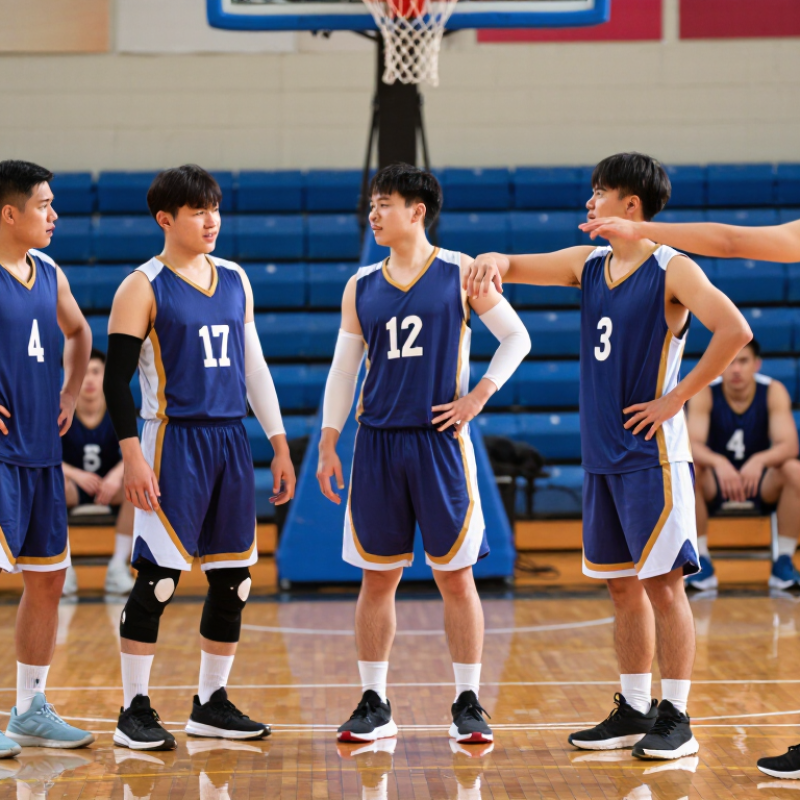
Before pricing uniforms, define the team’s actual requirements. List player numbers, sizes, home and away colors, reversible options, warm-up layers, and replacement needs. A youth team may need adjustable shorts, while a school team may require matching shooting shirts and approved numbering. The 2022–23 NFHS High School Athletics Participation Survey recorded 1,015,060 boys’ basketball participants and 928,360 girls’ participants in the United States. Scale matters when ordering several squads.
Build the budget around the full uniform cycle, not only the jersey quote. Request separate prices for tops, shorts, lettering, shipping, samples, alterations, and future replacements. Reserve 10–15% for late registrations, size exchanges, and damaged items. That estimate may be wrong. Older players often need longer inseams, while younger players can outgrow shorts within one season. The U.S. Bureau of Labor Statistics reported a 2.4% year-over-year increase in apparel prices in December 2023, showing why old quotes can become unreliable.
Use a simple worksheet for every player. Record chest measurement, waist measurement, inseam, preferred fit, and number assignment. Confirm whether the supplier’s size chart uses body measurements or garment measurements. Keep one physical sample for fitting before approving the order. The National Federation of State High School Associations also emphasizes consistent equipment and uniform compliance through its basketball rules framework. A cheaper uniform becomes expensive when numbering must be redone. Leave room for coach-approved changes, because practical fit can expose problems that a spreadsheet misses.
Choosing basketball team uniforms starts with fabric, not color. Players need material that manages sweat during repeated sprints. Lightweight polyester blends can dry quickly and resist daily washing. However, very thin fabric may feel fragile during contact. A small test helps. Hold samples under bright light, stretch them, and check seam recovery. I have found that breathable side panels improve comfort in crowded indoor gyms. They also reduce the sticky feeling after long defensive drills.
Fit must support movement without becoming loose. Measure chest, waist, shoulder width, and inseam for every player. Do not rely only on age-based sizing. Two athletes of the same age may need different cuts. A jersey should clear the hips but never restrict the shoulders. Shorts should allow deep squats without exposing the waistband. Try uniforms while jumping, turning, and reaching overhead. That practical check often reveals problems missed in a fitting room. We once chose a comfortable sample with a slightly long arm opening. It looked fine, yet distracted players during shooting.
Performance details should solve real problems. Flat seams can reduce rubbing around the neck and underarms. Reinforced stitching matters where shorts meet the waistband. Elastic panels should recover after stretching, not sag by halftime. Choose securely attached details that remain readable after washing. Keep care instructions clear for coaches and families. Wash testing is useful, but it cannot predict every season. Sweat, court friction, and hurried laundry still expose weak choices. Leave room for honest feedback. Ask players what feels hot, tight, or distracting.
Choosing basketball uniforms starts with colors that work under real gym lighting. In my experience, bright orange can look dull beneath old fluorescent lamps. Test fabric swatches beside the court, not only on a computer screen. Choose one primary color, one supporting color, and a readable contrast. White numbers on pale blue may disappear during fast play.
Patterns should support movement rather than distract from it. Thin side panels can create a cleaner silhouette. Large graphics may look impressive online but feel crowded on smaller players. Keep the design consistent across jerseys and shorts. Still, a small difference can help. A contrasting collar or hem gives the uniform character without overwhelming it.
Numbers need clear placement, strong spacing, and durable stitching. Check league requirements before ordering. Use numbers that remain visible from the stands and on game footage. I once approved narrow lettering because it looked modern. It became difficult to read after several washes. That choice was not perfect. Measure the front and back areas carefully, especially around seams. Team branding should reflect the group’s identity through a simple mark, local symbol, or meaningful color detail. Ask players for feedback during a fitting. Their comfort matters. A uniform that twists, traps heat, or scratches the neck will affect concentration. Order one sample, wash it, and test it through a full practice before selecting the final set.
Uniform sizing should begin with measurements, not a player’s age or usual clothing size. Sizing systems differ between manufacturers, so compare the official chart carefully. Check youth and adult ranges, then review standard, slim, and relaxed cuts. A dependable chart should list chest, waist, hip, torso, and inseam measurements.
Measure each player while they wear a thin base layer. Keep the tape level and comfortable, never tight. Record the chest at its fullest point and the waist above the hip bones. For shorts, measure the waist and inseam. The tape should stay straight.
In my experience, a short fitting session prevents many order problems. Let players raise their arms, bend their knees, and run briefly in a sample uniform. The jersey should not pull across the shoulders or expose the midriff during movement. Shorts need a secure waistband without restricting a defensive stance.
Our first fitting was not perfect. We trusted old size records, and several players had changed noticeably. That mistake taught us to measure everyone again before ordering. Confirm each measurement with the player, coach, and organizer. Recheck unusual results, especially when one measurement falls into a different size category. A slightly roomier fit often supports movement, but excessive fabric may catch during play. Keep the final list dated and signed.
How to Choose Basketball Team Uniforms for Your Team
Choosing uniforms starts with reviewing suppliers carefully. Ask for fabric samples, size charts, stitching photos, and previous team orders. A reliable supplier should explain fabric weight, breathability, color durability, and replacement policies clearly. Request a written quotation with shipping, artwork, and revision costs included. Do not judge quality from attractive online photos alone. I once overlooked the neckline stitching, and repeated washing exposed the weakness.
Customization needs precise planning. Prepare the team name, player numbers, sponsor details, colors, and logo files before requesting artwork. Confirm whether names and numbers are printed, heat-applied, or sewn. These methods differ in durability and cost. Ask for a digital proof and check every letter twice. Small errors look obvious on court. Keep a simple size list, because players often choose based on habit rather than actual measurements.
Tips: Order one sample uniform first. Test movement, sweat control, and wash performance. Confirm the final quantity before production begins. Standard orders may need three to five weeks, while complex designs can take longer. Add extra time for proof approval, shipping, and possible size exchanges. A ten-day buffer is sensible, although it may still feel excessive. Set a firm delivery date and receive progress updates in writing. Last-minute changes remain possible, but they usually increase costs and stress.
Use these planning ranges when reviewing suppliers: stock uniforms usually require the least preparation, semi-custom uniforms need time for artwork and team details, while fully custom uniforms require design approval, production, quality checks, and shipping. Confirm the final timeline after approving sizes, colors, artwork, and quantities.
Lightweight polyester blends can manage sweat and dry quickly. Breathable side panels help in crowded indoor gyms. Very thin fabric may feel fragile during contact. Test samples under bright light.
Measure the chest, waist, shoulders, and inseam for every player. Do not rely only on age or usual clothing size. Players should jump, turn, squat, and reach overhead. Movement reveals problems.
The jersey should clear the hips without restricting the shoulders. Shorts should allow deep squats without exposing the waistband. Excess fabric can catch during play. Roomy is not always better.
Flat seams can reduce rubbing around the neck and underarms. Reinforced stitching helps around the shorts’ waistband. Elastic panels should recover after stretching. Check the waistband at halftime.
Test fabric swatches beside the court under actual gym lighting. Bright colors may look dull beneath old fluorescent lamps. Use readable contrast between the uniform and numbers. Pale blue with white numbers may disappear.
Keep patterns simple and consistent across jerseys and shorts. Thin side panels can create a cleaner silhouette. Large graphics may overwhelm smaller players. A contrasting collar can add character.
Measure players over a thin base layer with a level tape. Record chest, waist, hip, torso, and inseam measurements. Recheck unusual results. Old records can be wrong.
Yes, wash one sample and use it during a full practice. Check seams, numbers, elastic recovery, and neck comfort. Laundry testing cannot predict every season. Sweat and court friction remain unpredictable.
Ask what feels hot, tight, scratchy, or distracting. Confirm measurements with the player, coach, and organizer. A uniform may look excellent but feel uncomfortable. Our earlier fitting proved that appearance is not enough.
Choosing the right Basketball team uniforms begins with clearly defining your team’s needs, playing environment, style preferences, and available budget. Consider durable, breathable fabrics that support movement and comfort, along with suitable fits and performance features such as moisture management, stretch, and reinforced construction. Your design should reflect the team’s identity through coordinated colors, patterns, player numbers, names, and other branding elements while remaining easy to read during games.
Before placing an order, compare sizing systems carefully and collect accurate measurements from every player to reduce fitting problems. Review suppliers based on material quality, customization capabilities, communication, and expected delivery times. Confirm all design details, including artwork, number placement, garment styles, quantity, pricing, and revision procedures. Planning these factors in advance helps create professional, comfortable, and consistent uniforms while ensuring the order arrives in time for practices, competitions, and team events.